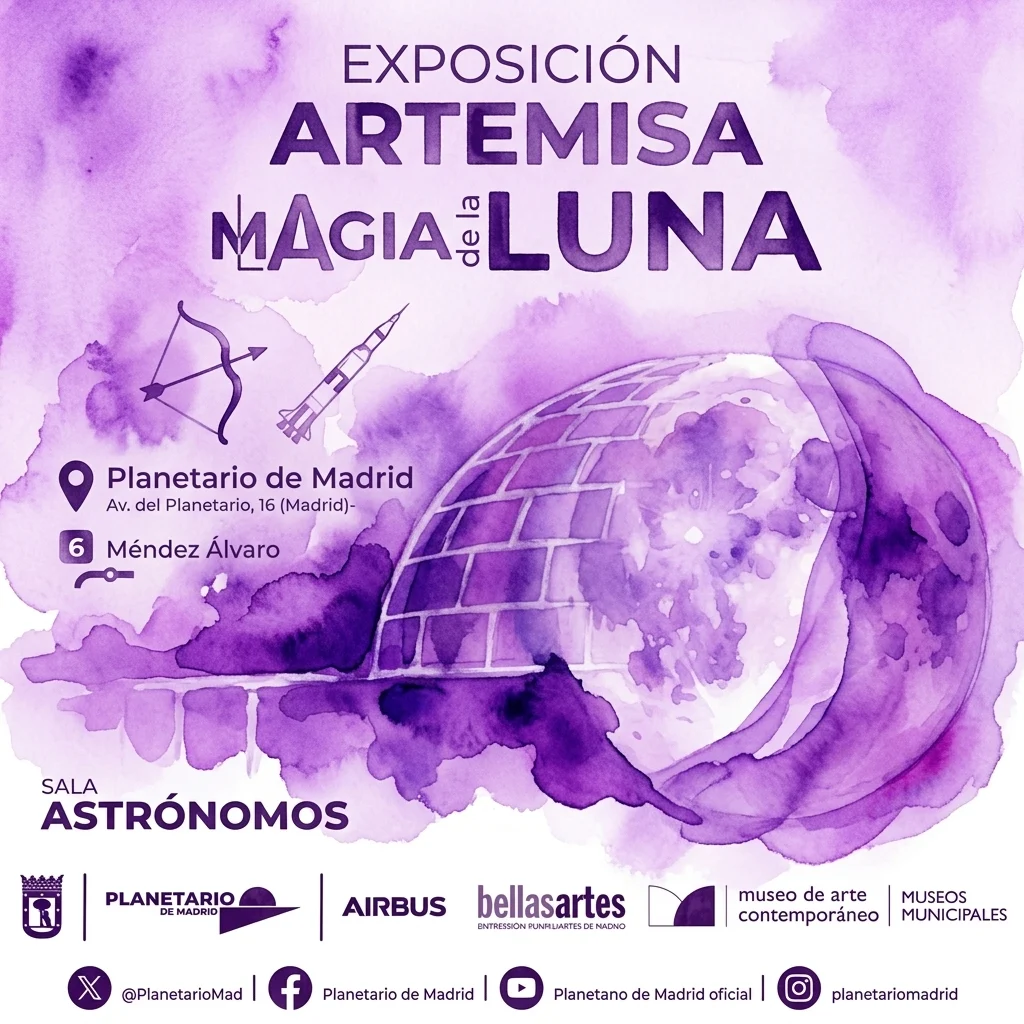
This exhibition offers a look at the European Space Agency's (ESA) recent contributions to human progress and space exploration. It highlights Europe's role in international cooperation, developing launchers, satellites, and ground infrastructure, and explores ESA's missions related to the International Space Station, the Solar System, Earth observation, and understanding the cosmos.
The 'Europa en el Espacio - ESA' exhibition at the Madrid Planetarium provides a citizen-focused perspective on the European Space Agency's (ESA) crucial role in advancing space capabilities since 1975. The exhibition delves into ESA's development of launchers, satellites, and ground infrastructure, positioning Europe at the forefront of space activities. It showcases ESA's work in launching satellites for Earth observation, navigation, telecommunications, and astronomy, alongside deep space probes and collaborations in human space exploration.
The exhibition is structured around four key themes: Europe's contribution to the International Space Station, including the Columbus laboratory and ATV, and its role in missions to the Solar System such as Mars Express, Venus Express, Rosetta, Huygens, and future endeavors like BepiColombo and Solar Orbiter. It also highlights ESA's commitment to understanding Earth through dynamic observation programs that monitor environmental changes and climate impacts, and its efforts to comprehend the cosmos with contributions from missions like Gaia, Herschel, and Planck.