The Royal Gallery of Natural History, established in 1771, showcases the historical role and importance of natural sciences collections. It features items of great historical value, including taxidermied specimens and artworks, with regularly updated content.
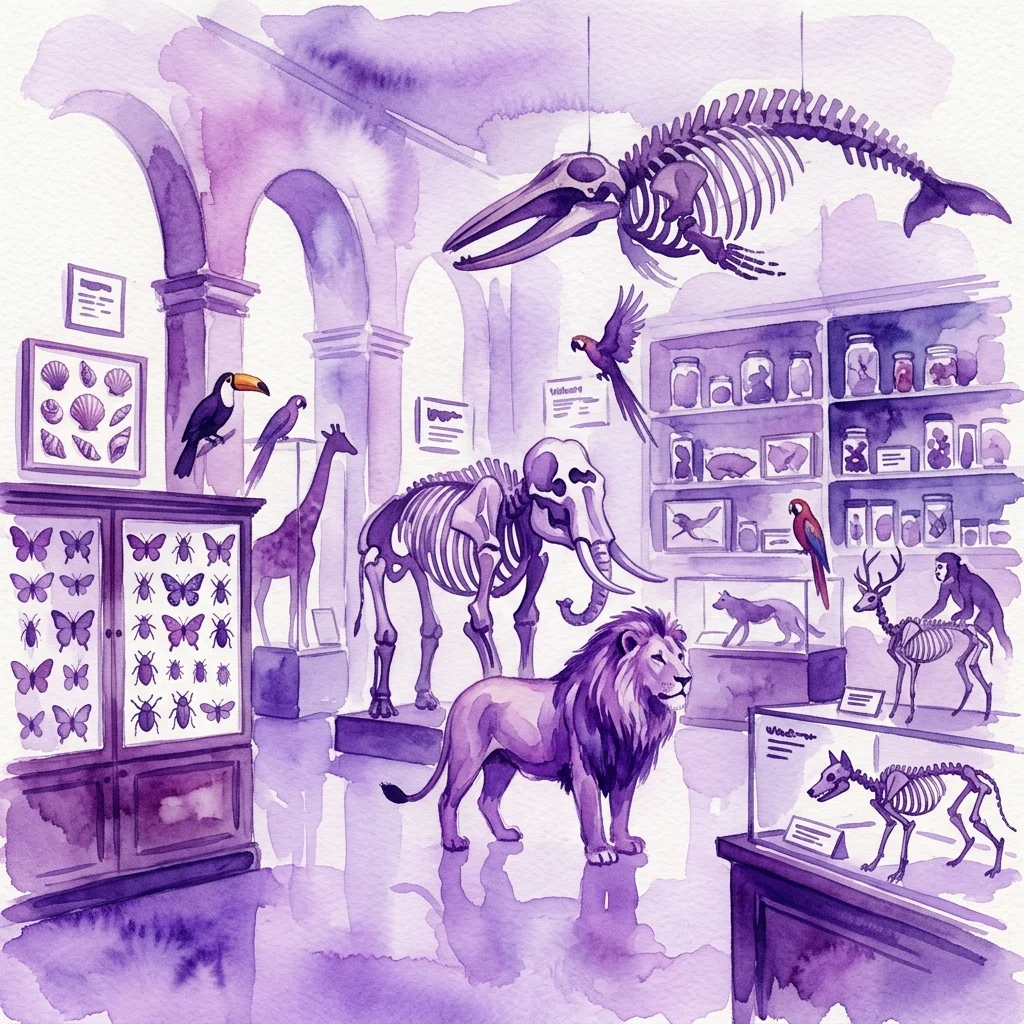
Established in 1771, The Royal Gallery of Natural History stands as a testament to King Charles III's commitment to the study of nature. Its foundational collection and first Director was Pedro Franco Dávila, who also published a seminal three-volume catalogue of his collections. The gallery evolved into the National Museum of Natural History, initially named the Royal Museum. The exhibition's contents are regularly updated, allowing visitors to encounter historically significant items for the first time alongside emblematic displays from recent years. Notable exhibits include a historic taxidermied Asian elephant, _Elephas maximus_, prepared by Juan Bautista Brú and based on a sculpture by Roberto Michel. A recent fascinating addition is _La Osa Hormiguera de Su Majestad 1776_, an oil painting attributed to Francisco de Goya, which portrays the animal against a backdrop of 18th-century Madrid. This painting, part of the museum's holdings since the late 18th century, has recently been integrated into the permanent exhibition. Complementing these displays, a video highlights various collections and publications from the Royal Gallery's archive and library, featuring works from the Van Berkheij and Pedro Franco Dávila collections, among others.
This exhibition offers visitors a chance to understand the historical role of natural sciences and the importance of the collections that originated at the former Royal Gallery of Natural History. Curators were driven by a profound sensibility towards science, reflecting the era's European intellectual climate. The exhibition aims to highlight the tremendous work of Pedro Franco Dávila, the first Director, guiding visitors on an exciting journey through time where key historical holdings of the Museum are presented.