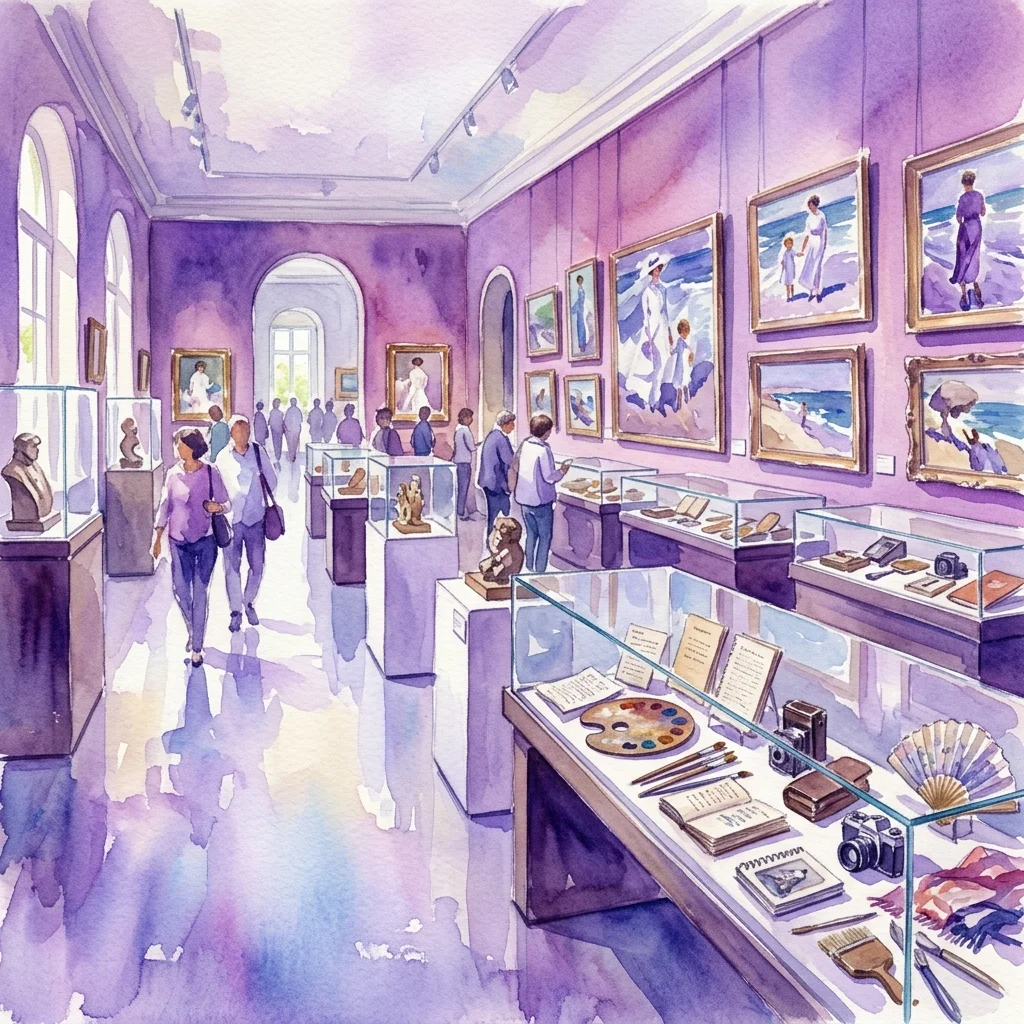
This exhibition explores the unexpected use of the color black in the works of Joaquín Sorolla, the painter renowned for his mastery of light and color. It challenges the conventional understanding of his palette by examining the presence and significance of black and grey tones in his oeuvre.
The exhibition "Sorolla en negro" (Sorolla in Black) delves into a less-explored aspect of Joaquín Sorolla's artistic output: his engagement with the color black. Known primarily as the "painter of light," Sorolla's oeuvre is typically associated with vibrant Mediterranean hues. However, this exhibition posits that black, often seen as the antithesis of color and light, is also notably present in his work. The exhibition challenges the traditional critical narrative surrounding Sorolla, and even his contemporaries' perceptions, by suggesting that the color black is not at odds with his artistic poetics but rather offers another viewpoint for understanding his complexity as an artist. Curated by Carlos Reyero Hermosilla, with collaboration from Blanca Pons-Sorolla, the exhibition is the result of extensive research into Sorolla's painting and the aesthetic and cultural valuation of blacks and grays in late 19th and early 20th-century art.
The exhibition stems from a curatorial proposal that questions the apparent paradox of associating Sorolla with black. It invites visitors to consider whether this association is a contradiction or a means to a deeper appreciation of the artist's full range. While the intense light of the Mediterranean, vibrant colors, and myriad whites define Sorolla, the exhibition highlights how black, as darkness itself, also features significantly on his palette. This exploration aims to broaden the understanding of Sorolla's artistic vision, revealing a more nuanced and complex painter than is often perceived.