
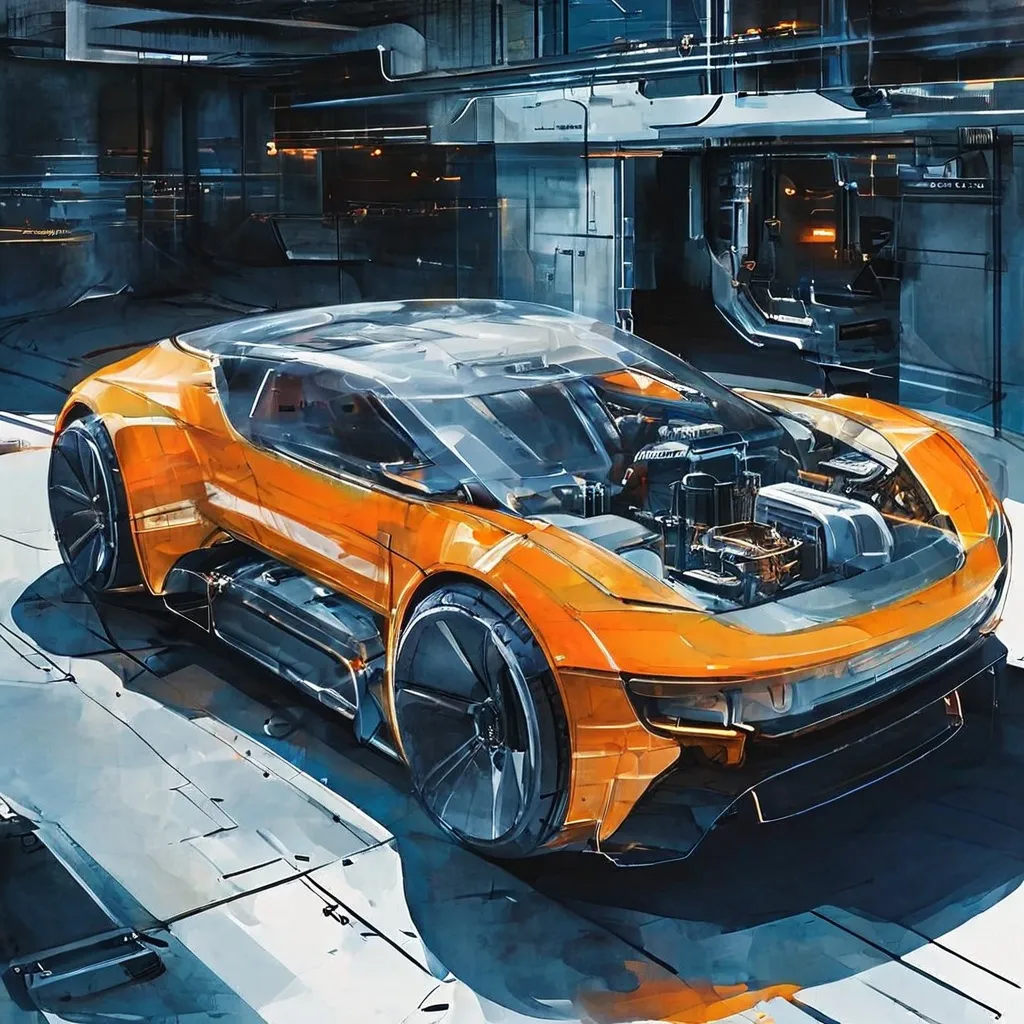
MINI Plant Oxford: Exploring BMW Group's Revolutionary NEUE KLASSE Electric Drive Innovations
Automotive enthusiasts and curious visitors planning a trip to MINI Plant Oxford can look forward to an exciting era of electric mobility as the BMW Group unveils its next-generation technological advancements. While the historic British site continues its legacy of car manufacturing, the wider corporate group is preparing for a massive shift toward all-electric driving with the introduction of sixth-generation BMW eDrive technology and the upcoming NEUE KLASSE vehicle generation.
What the NEUE KLASSE Architecture Means for Future Electric Vehicles
The upcoming vehicle generation introduces significant upgrades designed to improve efficiency, performance, and charging capabilities across the board. Key developments in the sixth-generation eDrive system include:
- Faster Charging and Extended Range: High-voltage batteries feature 800V technology, delivering a 30% increase in charging speed and a 30% boost in driving range for fully electric models.
- Flexible Battery Integration: A slimmer battery profile allows the energy storage units to fit seamlessly into various vehicle heights and segments, ranging from compact cars to high-performance models.
- Centralized Intelligence: The new in-house developed BMW Energy Master unit coordinates power distribution, data management, and safety protocols directly from the high-voltage battery housing.
- Innovative Manufacturing Principles: Utilizing "cell-to-pack" assembly, cylindrical cells are placed straight into the battery housing without intermediate modules, while the battery itself acts as a structural component under "pack-to-open-body" engineering.
Production expertise for these components is anchored in Bavaria and Austria. The BMW Energy Master is built at Plant Landshut, electric motors are manufactured in Steyr, and pre-series testing takes place at dedicated pilot facilities in Germany. Furthermore, a closed-loop recycling partnership with SK tes ensures that essential materials like cobalt, nickel, and lithium are recovered from end-of-life batteries and reintroduced into the manufacturing supply chain.
Advanced Motor Technology and Greater Efficiency
The technological rollout also features a refined approach to electric motors. The BMW Group has maintained its electrically excited synchronous motor (EESM) design for the rear axle, where direct-current windings generate the magnetic field instead of permanent magnets. Additionally, the NEUE KLASSE incorporates asynchronous motor (ASM) technology on the front axle for all-wheel-drive configurations, offering a compact, cost-efficient alternative.
By pairing these motor technologies with an upgraded 800V architecture and redesigned oil and water cooling systems, future models achieve notable reductions in energy losses, weight, and overall production costs compared to previous generations.
Visitors interested in discovering more automotive landmarks and cultural highlights around the city can plan their journey using Musemap (musemap.art), where you can also browse museums or view the interactive map for your next local excursion.


