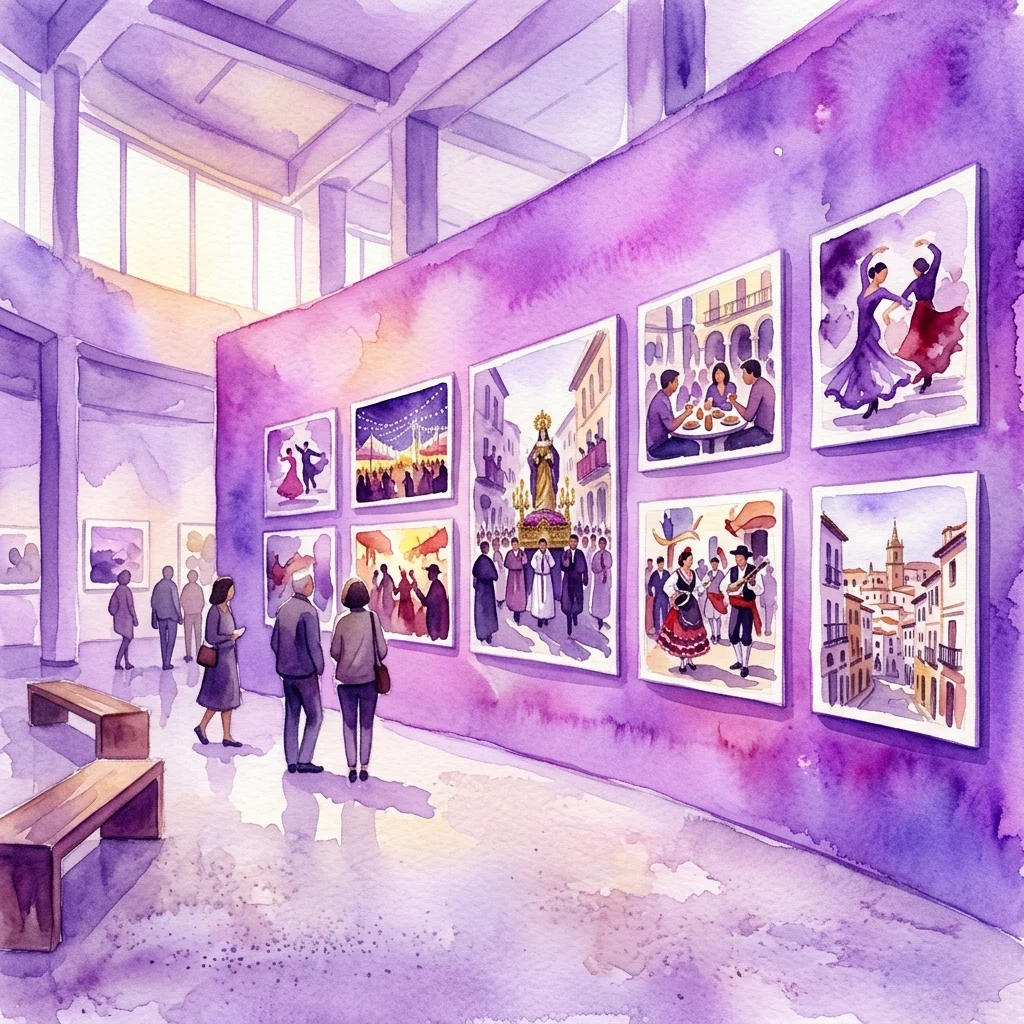
This exhibition explores the survival of historical elements in Spanish folk attire, demonstrating how time has shaped traditional costumes and accessories. It reveals diverse chronological and cultural roots, with a particular focus on influences from the late 18th century.
The exhibition 'La tradición en el espejo: Pervivencia de elementos históricos en la indumentaria popular española' challenges the notion of folk costumes being chronologically uniform, revealing a rich heterogeneity of origins. It highlights how historical periods, from Prehistory through the Renaissance and especially the late 18th century, have left an indelible mark on Spanish indumentaria. The exhibition showcases how accessories, such as combs, jewelry, fans, and buckles, reflect diverse historical references, mirroring contemporary fashions. The display is structured into four sections, each contextualized with period imagery or original historical garments from which popular attire models are derived.
Key examples include the feminine Ansó costume, with a pleated collar influenced by late 16th and early 17th-century fashions, paralleled by a copy of Rubens' 'Portrait of Helena Fourment'. Masculine jacket suits with high collars and breeches are shown alongside an 18th-century male ensemble. The exhibition also examines 'majos' attire, characterized by 'marsellés' style jackets, referencing Antonio María Esquivel's watercolor 'Mayoral'. Finally, feminine outfits from the 19th century, featuring black bodices and 'polisón' silhouette skirts, are displayed with original 19th-century non-popular garments.